Cardscapes™: Jigsaw Puzzle
- 4.8
- Rating
- 5.00M
- Installs
- Free
- Price

 Analysis by App-foxy
I spent time with Cardscapes™: Jigsaw Puzzle as a quiet, low-pressure puzzle game, and its appeal became clear quickly: it turns familiar jigsaw solving into a compact card-based experience that is easy to pick up whenever I have a few spare minutes. It comes from Malpa Games, belongs to the puzzle category, and is free to start, with optional in-app purchases priced at $14.99 per item. The store summary presents it as a relaxing logic puzzle built around swapping pieces and revealing artwork, but the more useful question is how it feels during ordinary use.
My answer is that this is best suited to players who enjoy gradual visual progress rather than urgency. I would recommend it to someone who wants a calmer alternative to timed match-three games, word puzzles with constant streak pressure, or traditional jigsaws that require a table and a large uninterrupted block of time. I would not choose it for competitive puzzle fans looking for leaderboards, rapid reactions, or a deep strategy layer. Its strength is the simple loop, and that simplicity is also where its limits begin.
How the puzzle feels in everyday play
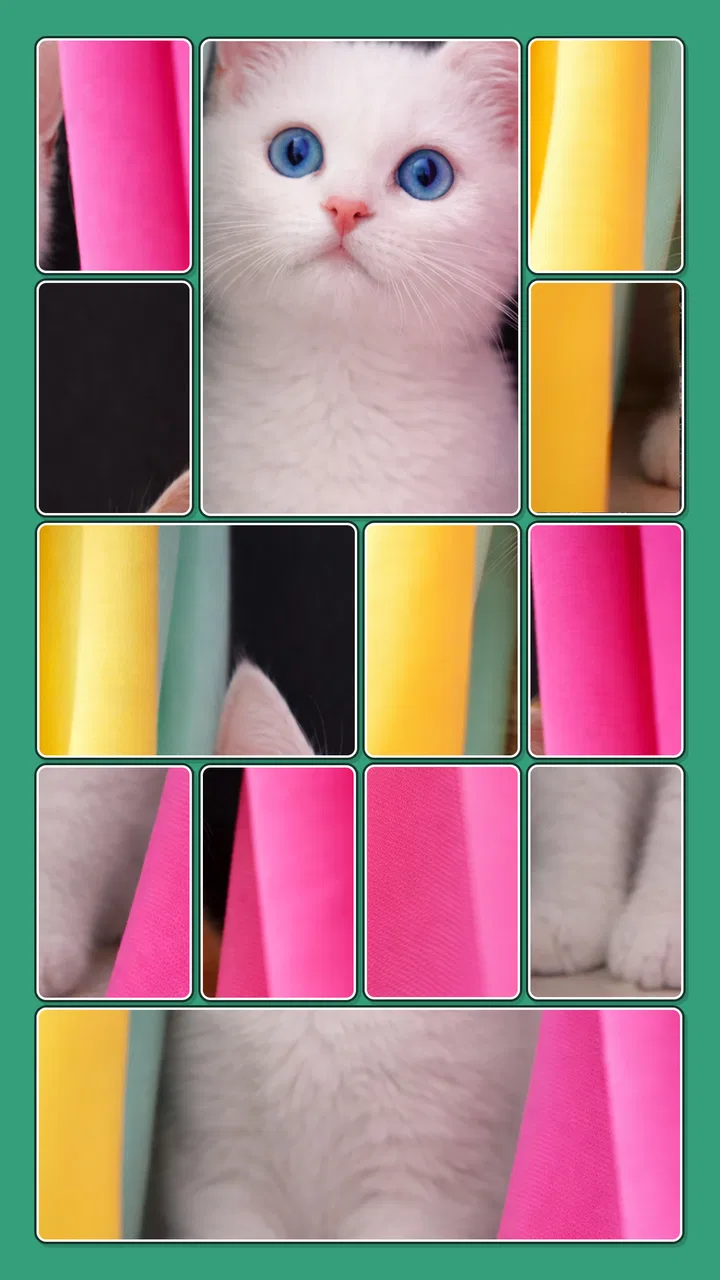
The basic rhythm is straightforward: I work through pieces, make swaps, and watch an image take shape. That structure gives each session a visible sense of progress without asking me to memorize complicated rules. The game’s card presentation makes the activity feel more contained than a full-screen physical jigsaw, which is useful on a phone when I am sitting on a train, waiting for an appointment, or taking a short break between tasks.
You May Also Like

 Blood Strike: 2.5 Anniversary
Blood Strike’s Loadouts Turn Every Drop Into a Tactical Gamble
A close look at Blood Strike’s custom loadouts: how fast access to signature weapons reshapes its battle royale rhythm, rewards preparation, and narrows the gap between fights.

 Pandora - Music & Podcasts
Pandora’s Music Is Easy to Start, but Harder to Recover
Pandora’s strength is its low-effort path from a seed to a station. Its weak spot is how much confidence it asks you to place in connection, setup, and quiet recovery.

 8 Ball Pool
 Is Built on Rivalries, Rematches, and Routine
A close look at the rivalries, rematches, shared routines, and unanswered safety questions that turn a quick pool match into a persistent mobile community.

 Samsung Music
’s Quiet Strength Is Playing What You Already Own
Its reach comes less from spectacle than from dependable access to a personal library. That simplicity is both the app’s strongest retention engine and its ceiling.

 AccuWeather: Weather Radar
AccuWeather Review: A Quick, Clear Forecast for Everyday Decisions
For everyday plans, the best forecast is the one you can understand quickly. AccuWeather makes rain timing, radar, and local conditions easy to act on, with a few trade-offs.

 Hill Climb Racing
Why Hill Climb Racing Still Turns Crashes Into One More Run
A tiny car, a bumpy hill and one more upgrade: Hill Climb Racing keeps resurfacing because its simple chaos makes every near-miss feel personal.
More From Our News Desk



What I like most is the low mental entry cost. I do not need to remember a campaign, learn a large collection of mechanics, or prepare a particular setup. I can open it, look at the current arrangement, and start making decisions. That makes it a good fit for tired evenings when I still want something interactive but do not want an intense challenge.
The “logic” element is modest rather than intimidating. The satisfaction comes from recognizing relationships between pieces and improving the image a little at a time. If you enjoy sorting colors, spotting visual continuity, and correcting small mistakes, the format has a pleasant flow. If you prefer puzzles where every move has a sharply defined mathematical consequence, this may feel too gentle.
A realistic use case is a short waiting period that expands unexpectedly. I might begin with the intention of playing for a few minutes, complete a useful section of an image, and then stop before the session becomes tiring. That stopping point matters. The game works well as a pause in the day because it does not demand the same commitment as a long story game or a physical puzzle spread across a table.
Why the presentation matters more than it first appears
In a jigsaw game, the artwork is not just decoration; it is the material I use to reason. Clear differences in color, texture, edges, and recognizable objects can make a puzzle feel satisfying, while large areas of similar detail can turn the same activity into guesswork. I found myself changing approach depending on the image: first grouping obvious colors, then using shapes and visual continuity when the picture became less distinctive.
That suggests a useful habit for new players: do not attack every puzzle in the same way. For a scene with strong color blocks, I start by identifying the most unusual tones. For a landscape or pattern with repeated textures, I focus on boundaries and likely neighboring forms instead of trying to match pieces by color alone. This small change prevents the game from becoming a repetitive search through the entire board.
I also prefer solving in short stages rather than trying to force a complete finish in one sitting. When I return after a break, the partially revealed image gives me a visual reminder of where I left off. That is more motivating than an abstract score because the progress is easy to understand at a glance.
Speed expectations on a normal phone
Because the game is built around swapping pieces and viewing artwork rather than rendering a large three-dimensional world, I expect its core interactions to feel lighter than those of graphically demanding mobile games. In my use, the important performance question is not whether it delivers console-style visuals; it is whether the board responds cleanly when I tap, drag, or make a correction. For this kind of puzzle, even small delays would be noticeable because the entire experience depends on precise, repeated interaction.
The current version is 1.12.1, and the game requires iOS or Android equivalent to at least version 12. That requirement places it within reach of many reasonably recent devices, although an older phone that technically meets the operating-system requirement may still offer a less comfortable experience than a newer model. Screen size also matters. A compact display can make individual pieces feel cramped, while a larger phone or tablet should make visual comparison easier, especially in detailed artwork.
I would not judge speed only by the opening screen. A puzzle can feel quick at launch but less comfortable once the board becomes visually busy. The more pieces I need to compare, the more important stable touch recognition becomes. My practical advice is to try a small session before committing to a purchase: check whether taps register naturally, whether the artwork remains clear at your preferred brightness, and whether the device feels warm during play.
There is also a difference between technical speed and perceived speed. A calm puzzle can feel slower simply because it avoids frantic animation and pressure. I see that as a design choice rather than a flaw. Players who want a rapid reward cycle may find the pace too restrained, while players who use games to unwind are more likely to appreciate it.
What happens during longer or heavier sessions
The heaviest moments are likely to come when a board contains many visually similar areas and I repeatedly compare possible swaps. That is demanding for my attention even if it is not demanding in the same way as a fast action game. I notice the cognitive load first: after working through a difficult section, I am more likely to make a careless move or lose track of which pieces I already tested.
My solution is to divide the image into zones. I work on one recognizable area, leave uncertain pieces alone, and return to them after the surrounding picture gives me more context. This is more efficient than randomly testing every possible match. It also reduces the feeling that the board is becoming chaotic, which is especially helpful on a smaller screen.
For extended play, comfort becomes part of performance. I lower the pace rather than trying to rush, keep the device at a readable brightness, and take a pause when I start making the same correction repeatedly. A puzzle game does not need to be physically intense to become tiring; sustained visual comparison can be surprisingly demanding.
I would be cautious about treating it as a background game while doing something else. The activity looks relaxing, but solving still requires visual attention. It is fine to play while waiting, yet it is not ideal if I am also trying to follow a conversation, watch a show closely, or move between tasks every few seconds. The best sessions are short, focused intervals where the puzzle has my attention without competing with an important responsibility.
Resource demands are difficult to separate from the device itself, but the game’s puzzle format gives me no reason to expect the kind of sustained graphics workload associated with a modern action title. Even so, I would avoid making assumptions about battery use or heat on every phone. Different screens, background apps, and system conditions can change the experience. If battery life is a major concern, I would use it in shorter sessions and check how my own device behaves rather than relying on a general promise.
Stability, interruptions, and recovering your place
Reliability matters in a puzzle because losing a carefully arranged state is much more frustrating than losing a few seconds in a casual arcade game. I pay attention to whether the board remains understandable after I pause, switch applications, or return later. A good recovery experience should let me recognize my current position quickly rather than making me rebuild the mental picture from nothing.
My practical recommendation is to finish a clear small section before leaving the game whenever possible. That is not because I expect a particular failure; it is simply a sensible habit for any mobile puzzle involving incremental progress. It gives me a natural checkpoint in my own mind and makes a return session easier, especially if I was interrupted unexpectedly.
Players who often move between phones should also think about continuity before becoming deeply invested. I would not assume that every mobile game handles progress identically across devices or operating systems. If preserving a particular puzzle state is important to you, test the way the game behaves on your own setup early rather than waiting until you have spent a long time solving.
Another recovery tip is to avoid making rapid corrective moves when I am unsure. I pause, inspect the surrounding image, and then act. This is useful both for solving accuracy and for understanding whether an apparent mistake came from my reasoning or from a touch that did not land as intended. Deliberate input makes the experience feel more controlled.
Device limits and accessibility of the format
The minimum operating-system requirement is version 12, so owners of very old devices should check compatibility before planning to play. Meeting that requirement does not automatically mean every handset will feel equally good. Puzzle games depend heavily on screen clarity and touch precision, and those qualities vary widely between devices that otherwise run the same operating-system generation.
A larger display is a meaningful advantage for detailed boards. It gives me more room to inspect neighboring pieces without constantly zooming mentally between small areas. On a smaller phone, I would use the zone method more strictly: choose a compact part of the picture, complete the most obvious matches, and avoid scanning the whole board at once.
Storage and background performance can also influence comfort, although I would not assign a universal impact to them. A phone with limited free space or many active applications may behave differently from a clean, recently restarted device. If the game feels less responsive than expected, I would first close unnecessary apps, check for system updates, and try again before deciding that the puzzle itself is unsuitable.
The Everyone content rating makes the game broadly approachable for households looking for a non-violent puzzle activity. That does not mean every child will enjoy it equally. Younger players may need help with patience and visual sorting, while adults who want a very difficult logic challenge may find the relaxed structure insufficient. Its accessibility comes from the simple premise, not from promising unlimited depth for every age group.
How it compares with familiar puzzle alternatives
Compared with a physical jigsaw, this game wins on convenience. I do not need a table, a box of loose pieces, or a protected space where an unfinished image can remain undisturbed. That makes it much easier to fit into a fragmented day. The trade-off is that digital swapping does not provide the same tactile satisfaction as handling cardboard pieces, and players who love the physical ritual may still prefer a traditional puzzle.
Compared with match-three games, Cardscapes™: Jigsaw Puzzle feels less reactive and less dependent on quick pattern recognition under pressure. There is no need to chase a chain of immediate combinations in the same way. I prefer this when I want to slow down, but someone who enjoys constant movement, special effects, and rapid rewards may find the jigsaw format too quiet.
Compared with word puzzles, the challenge is visual rather than language-based. That makes it appealing when I am tired of clues, spelling, or vocabulary, and it can be a better choice for players who think more comfortably in images. On the other hand, word games often provide a clearer sense of a right answer, while a visual arrangement can leave me uncertain until more of the artwork is revealed.
Compared with demanding logic games, this is the more approachable option. I can play without studying a rule system, but I also should not expect the same strategic complexity as a puzzle built around deduction, resource management, or multi-step planning. The choice depends on the mood I want: visual relaxation and gradual completion here, deeper mental pressure elsewhere.
Who will enjoy it, and who should skip it
I think it is a strong match for casual puzzle players, people who enjoy artwork-driven tasks, and anyone looking for a calm phone activity that can be paused naturally. It also suits players who like visible progress and prefer learning through doing rather than reading instructions. The free entry point makes it easy to test that fit before spending anything.
I would be more cautious if you dislike repetitive visual comparison, become frustrated by uncertain piece placement, or need a strong competitive system to stay interested. I would also skip it in favor of a more demanding logic title if your main goal is complex deduction rather than relaxation. The game is not failing when it feels gentle; gentleness is its central appeal. It simply will not satisfy every definition of a challenging puzzle.
The optional purchase price of $14.99 per item is worth considering before treating the game as a long-term hobby. I would begin with the free experience and ask myself whether the core swapping loop remains enjoyable after several sessions. If the answer is yes, an optional purchase may feel reasonable for a committed player; if the answer is no, paying will not fix a mismatch with the underlying style.
My performance verdict after regular use
My overall impression is of a focused, accessible puzzle game whose performance expectations should be modest and realistic. Its design does not appear aimed at heavy graphical spectacle; it is about keeping attention on the image, the pieces, and the satisfaction of completing a section. That makes perceived responsiveness and visual clarity more important than raw visual ambition.
The game has a 4.8 average from around 190 thousand ratings, and it has passed the five-million-install mark. Those figures suggest that the format has found a substantial audience, but popularity alone does not decide whether it belongs on your phone. I would use those signs as encouragement to try it, not as a substitute for considering your preferred puzzle style.
It is free, rated for Everyone, and developed by Malpa Games, with the current version listed as 1.12.1. Released on December 11, 2025, it is a recent option for players who want a digital jigsaw experience without the physical clutter. I especially recommend it for short, quiet sessions on a device that meets the operating-system requirement and has a screen comfortable enough for detailed visual work.
My honest recommendation is to treat it as a relaxation puzzle first and a serious logic challenge second. Start with a brief session, test the touch feel on your phone, and notice whether revealing the artwork gives you enough motivation to continue. If you enjoy that steady visual payoff, this can become a pleasant daily break. If you need competition, complex rules, or tactile pieces, a different puzzle format will serve you better.
For me, the best reason to keep it installed is not a promise of intensity but the ease of returning to it. I can pick up a partially completed image, apply a simple sorting strategy, and make progress without preparing for a major gaming session. That combination of low friction, visual focus, and flexible pacing is where Cardscapes™: Jigsaw Puzzle earns its place.
FAQs for Cardscapes™: Jigsaw Puzzle
01What is Cardscapes™: Jigsaw Puzzle?
Cardscapes™: Jigsaw Puzzle is an innovative mobile game that combines the classic appeal of jigsaw puzzles with the engaging challenge of card collecting. Players can enjoy a variety of beautifully designed puzzles while unlocking and collecting unique cards that enhance the gameplay experience.
02Is Cardscapes™ free to play?
Cardscapes™: Jigsaw Puzzle is free to download and play, offering a wide range of puzzles at no cost. However, the game includes in-app purchases that allow players to buy additional cards, power-ups, and premium content to enhance their gaming experience.
03What are the system requirements for Cardscapes™?
Cardscapes™: Jigsaw Puzzle is compatible with both Android and iOS devices. For Android, it requires version 5.0 or higher, and for iOS, version 11.0 or later. Ensure your device has enough storage space and a stable internet connection for optimal performance.
04Are there multiplayer features in Cardscapes™?
Cardscapes™: Jigsaw Puzzle primarily focuses on single-player experiences, allowing players to enjoy puzzles at their own pace. However, the game includes leaderboards and social sharing features where players can compare their progress and achievements with friends.
05Is there customer support available for Cardscapes™?
Yes, Cardscapes™: Jigsaw Puzzle offers customer support for any technical issues or gameplay questions. Players can access support through the app’s settings menu or visit the developer’s website for additional resources and contact information.
Pros
- Stunning visual design and graphics.
- Engaging variety of puzzles and themes.
- Intuitive controls for easy navigation.
- Regular updates with new content.
- Offline mode available for on-the-go play.
Cons
- In-app purchases can be costly.
- Some puzzles may be too challenging.
- Occasional ads disrupt gameplay.
- Limited hints without purchases.
- Requires substantial storage space.

Cardscapes™: Jigsaw Puzzle
Gallery